
So, what is copywriting, really?
At its core, copywriting is the craft of writing words that prompt people to take a specific action. That action could be anything from buying a product to clicking a button or signing up for an email list.
What Is Copywriting Really All About
Think of copywriting as the bridge between a business and its potential customer. It's the persuasive, one-on-one conversation happening on a webpage, in an ad, or inside an email that gently guides someone from "I'm just looking" to "I need this."
While other types of writing might aim to entertain or simply inform, copywriting has one job: to get results. It's not about winning literary awards; it's about connecting with an audience in a way that moves them to act. This focus on action is what makes it so different from other writing, and it's a key part of any solid https://naturalwrite.com/blog/what-is-content-marketing-strategy.
The Art and Science of Persuasion
Copywriting is a fascinating mix of creative art and hard science.
The "art" is all about human psychology. It’s the empathy required to understand what your reader truly wants, fears, or dreams of. It’s the storytelling that paints a picture, evokes an emotion, and makes a genuine connection.
The "science" is rooted in data and strategy. Great copywriters don’t just guess; they test. They lean on proven frameworks, run A/B tests on their headlines, and dig into analytics to see what works. Success isn't measured in beautiful sentences, but in tangible metrics like click-through rates and sales.
Copywriting is one of the most essential elements of all marketing. It is the art of arranging words in such a way that they sell your product, service, or idea.
Adapting to Modern Challenges
Today, we're all swimming in a sea of content. This makes the ability to write clear, persuasive copy that feels truly human more critical than ever. The tools of the trade are always changing, too. For instance, knowing what is AI-generated content is becoming essential for modern writers who need to stand out.
But even with all the new technology, the fundamental goal of copywriting hasn't changed a bit: use the right words to solve a problem and help a business grow.
Exploring the Different Worlds of Copywriting
Think of copywriting less as a single job and more like a massive city with different neighborhoods. Each one has its own vibe, its own language, and its own rules. The copy that works for a high-octane sales page would fall completely flat on a minimalist brand billboard. Understanding these different specializations is your first real step toward mastering the craft.
Some types of copy are all about getting an immediate, measurable reaction. Others play the long game, focusing on building trust and creating a loyal following over time. It’s all about matching the right words to the right goal.
This map breaks down how copywriting is really a blend of art, science, and good old-fashioned persuasion.
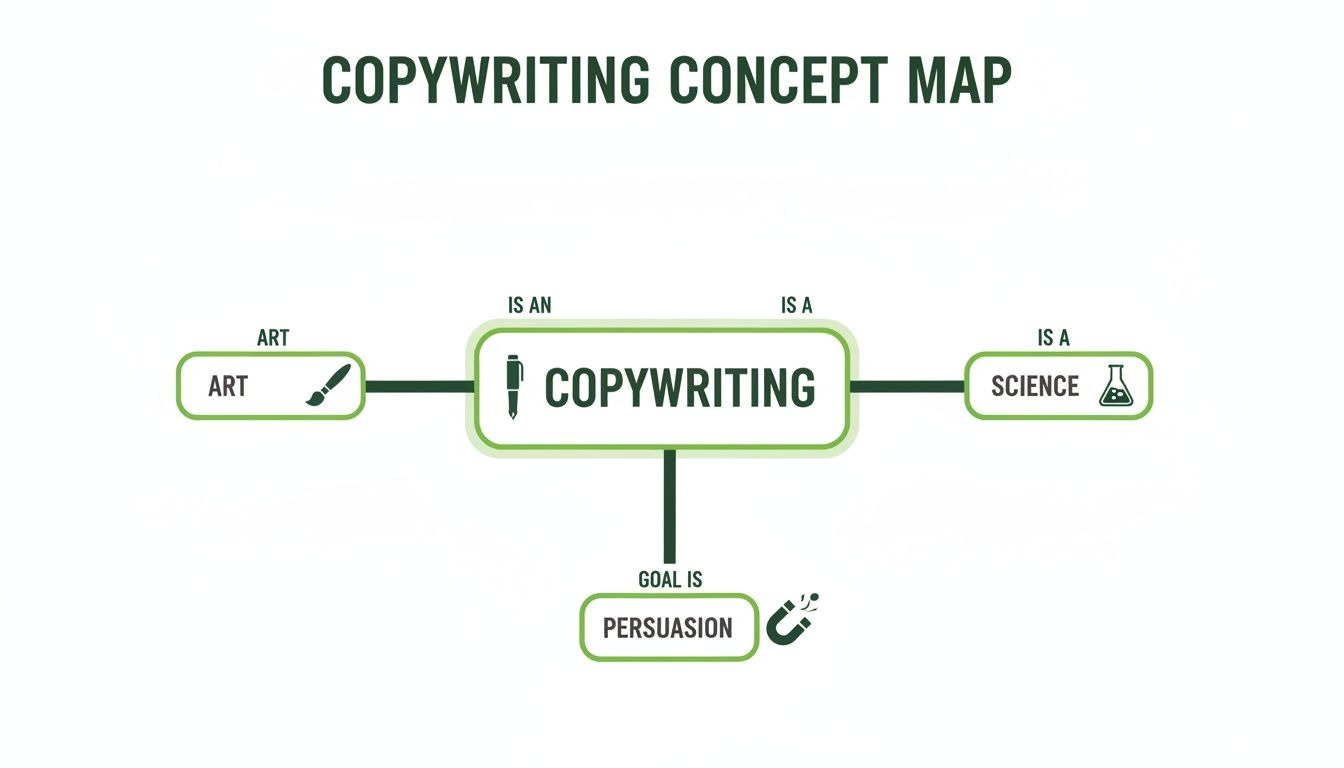
It’s a great reminder that great copy isn't just about being clever with words. It's a strategic discipline that uses psychological triggers and hard data to get results.
Common Copywriting Specializations
While the world of copywriting has countless little niches, most professional work falls into a few major categories. Each one demands a slightly different way of thinking and a unique set of skills.
Direct Response Copywriting: This is copywriting in its purest, most action-oriented form. Its one and only job is to get someone to do something right now. Think "Click Here," "Buy Now," or "Sign Up Today." You see it everywhere—on sales pages, in your mailbox, and all over your email inbox.
Brand Copywriting: This is more about crafting a personality than pushing for a sale. It’s the art of building a memorable identity and making people feel something about a company. Think of Nike’s “Just Do It” or the quirky, friendly voice of a brand you love. It’s about creating fans, not just customers.
SEO Copywriting: This is a fascinating hybrid. You’re writing to please two very different audiences at once: real people and search engine algorithms. The goal is to rank high on Google to pull in organic traffic, but the copy still has to be compelling enough to persuade the humans who find it. If that sounds interesting, you can learn more in our complete guide to SEO copywriting.
Good copywriting is a conversation. It starts by understanding who you're talking to and what they truly need. It's about empathy before it's about selling.
Picking a path often comes down to what you enjoy most. Do you love the data and analytics of SEO? The psychological puzzle of direct response? Or the creative challenge of building a brand's voice from the ground up?
What Makes Great Copy Actually Work?
Ever read something and felt an undeniable urge to click, buy, or sign up? That’s not an accident. Great copywriting is a masterclass in strategic persuasion, built from a few core components that, when combined, guide a reader seamlessly toward taking action.
Think of it less like magic and more like engineering. The final product might look effortless, but underneath lies a solid framework. Let’s break down that framework.

It all hinges on a single, powerful idea. Every word, every sentence, and every paragraph must rally behind this one core message. Without that singular focus, your copy will feel scattered, and your reader will just get confused and click away.
The Anatomy of Persuasive Copy
To get copy to do its job, you need to nail a few essential elements. These are the non-negotiables—the skeleton that holds your entire message together. Get these right, and you're already halfway there.
The Big Idea: This is your hook. It's the one compelling, unique thought that cuts through the noise and grabs your reader’s attention. A great Big Idea instantly answers their subconscious question: "Why should I care about this?"
The Headline: Your headline has one mission: get the first sentence read. It has to be magnetic enough to stop someone from scrolling and make a promise that the rest of your copy will keep.
Benefits, Not Features: Here’s a classic rule that never gets old. People don’t buy a drill; they buy the hole it makes. A feature is what something is (like a "500mAh battery"), but a benefit is what it does for them ("stay connected through your entire flight"). Always translate your product’s specs into a real-world advantage for the customer.
The Call to Action (CTA): This is where you close the deal. A strong CTA isn't a demand; it's the clear, logical next step. It tells the reader exactly what to do next in a simple, compelling way that feels helpful, not pushy.
Good copy is a clear path. It takes a reader from a problem they have to a solution you offer, with every word acting as a signpost along the way.
Mastering these building blocks is just the start. To really level up, it's worth exploring the broader world of powerful conversion rate optimization techniques that can amplify the impact of your words.
Putting It All Together
How you assemble these pieces is what makes the difference. Take email copywriting, for example. Personalizing your message connects the benefits directly to an individual's needs. It's no surprise that tailored emails see 29% higher open rates and an impressive 41% higher click-through rate compared to generic blasts.
If you’re just getting started and want a practical walkthrough, check out our simple guide on how to write website copy.
Spotting Great Copywriting in the Wild

The best way to really get copywriting is to see it in action. Once you know the signs, you'll start spotting brilliant examples everywhere—from your inbox to your Instagram feed. Let’s put on our detective hats and break down what makes these messages click.
Think about the last social media ad that actually made you stop scrolling. It wasn't just a cool visual, was it? The words likely hooked you by asking a sharp question, making a bold claim, or telling you something you didn't know. That's a core principle of copywriting: earning attention in a sea of noise.
Example 1: The Persuasive Product Description
Let's look at something as simple as a product description for a high-end coffee maker. The lazy version would just list its features: "1.5-liter water tank, stainless steel construction, 1200-watt heating element." Sure, it's accurate, but it's also incredibly boring. It doesn't make you want it.
Now, let's see how a copywriter would translate those dull features into real-world benefits.
"Brew a full pot for everyone without running back to the sink. Our durable stainless steel finish looks stunning on your countertop. Best of all, a 1200-watt rapid-heating system means you're never more than 60 seconds away from the perfect cup."
See the difference? This version isn’t just describing a machine; it's selling the experience of a better, easier morning. It connects the dots for you, turning technical specs into a solution for your daily life.
Example 2: The Intriguing Email Subject Line
An email subject line is another perfect example. It's a tiny piece of copy with a huge responsibility: get the open. A subject line like "Our Weekly Newsletter" is a one-way ticket to the trash folder. It’s generic and uninspired.
But what about something like, "The 5-minute habit that changed our business"? This one sparks curiosity and promises a valuable secret. It uses intrigue to earn that click, proving that great copy gives people a powerful reason to take the next step.
The Unseen Skills of a Great Copywriter
Becoming a great copywriter isn't just about knowing grammar rules or having a dazzling vocabulary. The skills that truly make the difference are often invisible, rooted more in psychology and strategy than in pure wordsmithing. These are the pillars that let a writer create copy that connects, builds trust, and ultimately persuades.
The most potent tool in any copywriter's kit is deep empathy. It's the ability to climb into your audience's world and truly understand their secret hopes, nagging fears, and daily frustrations. When you can write from that perspective, your copy stops feeling like a sales pitch and starts sounding like a real conversation.
The Core Competencies
Beyond empathy, a handful of core skills form the bedrock of all effective copy. They work in tandem to turn a simple message into something that makes people want to act.
Relentless Research: Killer copy is built on a mountain of research. You have to dive deep into the product, the market, and—most importantly—the customer. Your goal is to become an expert on who you're talking to.
Crystal Clarity: Persuasive writing is always simple writing. A copywriter's main job is to distill complex ideas into clear, concise language that anyone can grasp in a heartbeat.
Adaptability and Versatility: Top copywriters are like chameleons. They can effortlessly shift their tone and style to match any brand's voice, whether it's for a quirky startup or a buttoned-up financial firm.
True copywriting isn't about writing; it's about thinking. It’s about solving problems for the reader and the business, using words as the tool to build a bridge between them.
This focus on human-centric skills is more valuable today than ever before. With AI flooding the internet with generic content, the ability to craft genuinely persuasive text has become a premium skill. In fact, some industry findings project a surge in the copywriting services market, mainly because brands can no longer win on volume alone. They need that authentic human connection to cut through the noise.
Your First Steps into the World of Copywriting

Feeling fired up? Good. The single best way to learn copywriting is to simply start writing. Forget about chasing expensive courses or getting bogged down in theory for now. Real, hands-on practice is where the magic happens.
Here’s a simple roadmap to turn that inspiration into actual skill.
Build Your Foundational Toolkit
You can start your training this very minute, without spending a dime. All it takes is a little bit of time and a keen eye.
First, a word of advice: great writers are also great collectors. The journey doesn't begin with writing, but with observing what works.
Here’s how to put that into practice:
Start a Swipe File: This is non-negotiable. Create a folder on your computer and start saving every ad, email, landing page, and social post that makes you stop and think. Don't just save them—add a quick note about why it caught your eye. This becomes your personal vault of proven ideas and inspiration.
Rewrite Existing Copy: Find a piece of copy that you know is weak. It could be a bland product description, a confusing ad, anything. Your mission? Rewrite it. Try to make it punchier, clearer, and more focused on the customer's needs. This is like a workout for your writing muscles, and it's one of the fastest ways to improve.
“Good writing starts with good thinking.” - Emma Tarp
This gets to the heart of it. Understanding the "why" behind great copy is just as critical as the act of writing itself. Always think about what the reader truly wants before a single word hits the page.
Finally, read a couple of the classics. I’m not talking about the latest digital marketing fad, but the timeless books on persuasion and human psychology. By combining observation, hands-on practice, and a little foundational knowledge, you'll be well on your way to becoming a skilled and confident copywriter.
Common Copywriting Questions Answered
As you start exploring copywriting, a few questions always seem to pop up. Getting these sorted out is key to understanding where this skill fits in the grand scheme of writing and business. Let's clear up a few of the most common ones.
How Is Copywriting Different From Content Writing?
This is probably the biggest point of confusion for newcomers, and the answer comes down to one thing: intent.
The sole purpose of copywriting is to persuade someone to take a very specific action right now. Think "Buy Now," "Sign Up Today," or "Download the Guide." It’s direct, action-oriented, and its success is measured in conversions.
Content writing, on the other hand, plays the long game. Its goal is to inform, educate, or entertain an audience to build trust and brand loyalty over time. A blog post, a how-to guide, or an insightful case study are all forms of content writing. It builds the relationship so that when the copy asks for the sale, the reader is already warmed up.
Can I Just Use AI to Write My Copy?
Yes, but with a big asterisk. AI writing tools are fantastic for brainstorming, getting past a blank page, or even creating a rough first draft. They can be incredible assistants.
But truly great copy—the kind that connects with people on an emotional level—still needs a human touch. A skilled writer is essential for weaving in the empathy, brand voice, and strategic nuance that AI just can't replicate (at least, not yet).
Think of AI as a powerful apprentice. It can handle the repetitive tasks and heavy lifting, but the master craftsperson (you!) is still needed to provide the final, artful touch that makes the piece connect and sell.
Do I Need a Degree to Be a Copywriter?
Absolutely not. While a degree in marketing, English, or communications certainly doesn't hurt, it's not a requirement for a successful career in copywriting.
What clients really care about is whether you can get results. Your portfolio—a collection of your best work demonstrating your ability to write persuasive, effective copy—is far more valuable than any diploma. A strong portfolio proves you can do the job, and in this field, proof trumps pedigree every time.
Ready to turn your AI-generated drafts into compelling, human-sounding copy? Natural Write offers a free, one-click solution to refine your text, ensuring it's clear, engaging, and bypasses AI detection with ease. Try it now at https://naturalwrite.com.