

If you want to boost your social media engagement, you have to do more than just post and hope for the best. It's about creating content that actually starts a conversation, and to do that, you need to know what your audience wants to see.
This means you need to move beyond simply posting and start auditing what’s working, creating content people find valuable, and jumping into discussions to build a real community.
Auditing Your Current Social Media Engagement
Before you can improve your numbers, you need an honest look at where you stand right now. A social media audit isn’t just about counting likes—it’s about digging into your data to find the patterns that tell the real story. This is the foundational step that gives you the insights to build a strategy that works, instead of just guessing.
Establish Your Starting Point
First things first, you need a baseline. What’s your current average engagement rate? Which formats—videos, carousels, single images—get the most comments and shares? Pinpointing your top performers gives you an immediate clue about what your audience actually values.
This is also the perfect time to get to know the people interacting with your posts. If you don't understand their pain points and interests, you’ll never create content that truly connects. For a deeper dive on this, check out our guide on what is audience analysis.
Focus on Metrics That Matter
It's time to look past vanity metrics like follower count. Instead, focus on the KPIs that signal a healthy, active community.
- Comment-to-Like Ratio: A high number of comments compared to likes is a great sign. It suggests your content is thought-provoking enough to make people stop and type.
- Share Rate: Shares are a massive endorsement. When someone shares your post, they’re telling their own network that what you created is valuable.
- Saves: On platforms like Instagram, saves are a goldmine. They tell you that your content is so useful, people want to come back to it again and again.
A low engagement rate isn’t a failure; it’s a compass. It points you directly toward your biggest opportunities for growth by showing you exactly where your current strategy is falling short.
Recent data shows just how important this is. With the average engagement rate on Facebook at a tiny 0.07% and Instagram at 1.16%, you can't afford to be passive. You need proactive tactics to stand out.
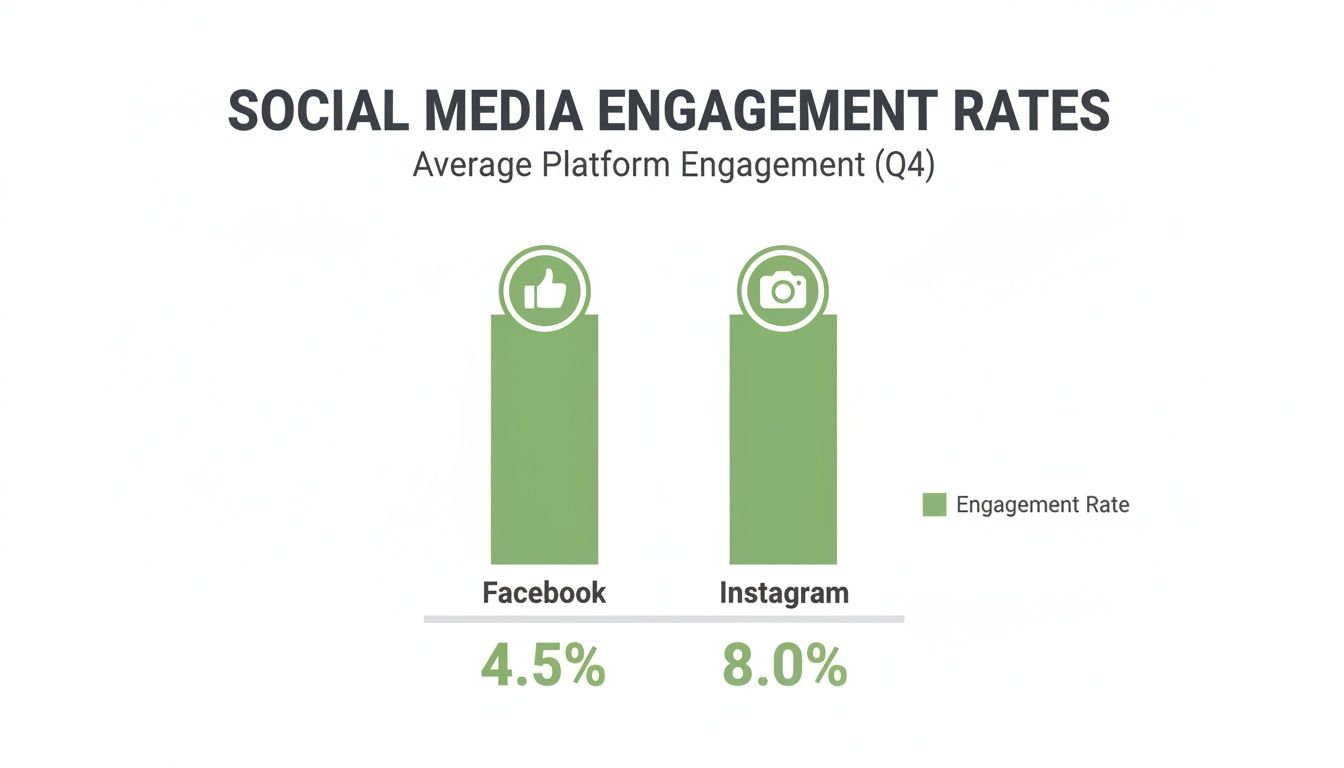
As the chart shows, what works on one platform won't necessarily fly on another, which is why a platform-specific audit is so critical.
Key Engagement Metrics to Track By Platform
To get a clear picture of your performance, don't try to track everything at once. Focus on the primary engagement metrics for each platform during your audit. These are the numbers that will give you the most signal and the least noise.
| Platform | Primary Metrics | Secondary Metrics |
|---|---|---|
| Likes, Comments, Shares, Saves | Story Replies, Profile Visits, Reach | |
| Likes, Comments, Shares, Reactions | Post Clicks, Video Views (3-sec) | |
| X (Twitter) | Likes, Retweets, Replies | Profile Clicks, Impressions |
| Likes, Comments, Shares, Reactions | Post Clicks, Impressions | |
| TikTok | Likes, Comments, Shares, Saves | Video Views, Profile Views, Favorites |
By gathering this data, you’re not just collecting numbers—you’re building a solid foundation for every strategic decision you make from here on out.
Creating Content That Actually Connects

"Post great content" is probably the most useless piece of social media advice out there. What does it even mean?
Truly engaging posts come from knowing your audience inside and out—their real-world problems, what they're passionate about, and what makes them laugh. Every single thing you post needs a purpose, whether that's to teach something, entertain, inspire, or just make someone's day a little brighter.
The first move is to ditch the random content ideas and lock in your content pillars. These are the core themes you'll talk about, again and again. Think of them as guardrails that keep every post on-brand, focused on your expertise, and dialed into what your audience actually cares about.
Map Content to Audience Needs
Once your pillars are set, the real work begins. Your goal is to connect each pillar directly to something your audience wants or a problem they're facing.
For example, if one of your pillars is "sustainable living," your content could tackle the challenge of "finding affordable eco-friendly products" or the desire for "easy recycling tips." Simple, right? This small shift changes your entire mindset from, "What should I post today?" to "How can I help my audience today?"
- Educate: Think quick how-to guides, myth-busting carousels, or simple tips that solve a common frustration.
- Entertain: Share a relatable meme, a behind-the-scenes look at your workspace, or a funny story that hits home.
- Inspire: Post user-generated content (UGC), celebrate a customer's success story, or share a quote that aligns with their goals.
When your content is built around genuine needs, people are way more likely to save it, share it, and drop a comment. To really nail this, you can dig into these content creation best practices for viral growth.
Develop an Authentic Brand Voice
How you say something is just as critical as what you say. Your brand voice is your personality, and it needs to feel human—not like a robot wrote it. Are you witty and informal? Or are you more authoritative and supportive? Pick a lane and stick to it.
An authentic voice builds trust. People connect with brands that feel real and relatable, not like they're reading a press release. This consistency is what turns followers into a loyal community.
A strong voice comes through in everything from your captions and comment replies to your DMs. It's the common thread that makes your brand instantly recognizable. If you want to get more advanced, you can learn what is content personalization and use data to tailor your messaging even further.
Use Storytelling to Spark Conversation
Facts tell, but stories sell. On social media, they also start conversations. Storytelling can turn a boring company update into something people actually remember. Instead of just announcing a new product feature, tell the story of the problem it solves for a real person.
Give these storytelling formats a try:
- Behind-the-Scenes: Show your process, introduce the team, or even share a mistake you made. That kind of transparency builds trust and makes your brand feel way more approachable.
- Customer Spotlights: Make your audience the hero. Share their stories and celebrate their wins. It’s a powerful way to build a real community.
- Founder Stories: People connect with people. Sharing the "why" behind your brand creates an emotional hook that a list of product specs never will.
Each of these gives your audience a reason to jump in, share their own experiences, ask questions, and become part of your brand's ongoing narrative. And that’s what creating content that connects is all about.
Mastering Platform-Specific Engagement Tactics
Posting the same thing everywhere is like using the same key for different locks—it just won’t work. Every social media platform is its own little world, complete with a unique algorithm, different user habits, and its own favorite types of content. If you want to boost your engagement, you have to create content that feels native to each space.
What absolutely crushes it on TikTok might completely flop on LinkedIn. A winning strategy means respecting the unwritten rules and culture of each platform. This goes way beyond simple cross-posting; it's about fundamentally rethinking how people on each app actually consume and interact with what you share.
Instagram Engagement Strategies
On Instagram, the entire game is about stopping the scroll. That means your visuals have to be compelling. The platform rewards content that feels polished but still comes across as authentic.
- Embrace Reels: Short-form video is still king here. Jump on trending audio, but put your own spin on it to make it genuinely relevant to your brand. Think quick tutorials, behind-the-scenes moments, or relatable humor.
- Leverage Interactive Stories: Features like polls, quizzes, and the "Add Yours" sticker are gold. They're low-effort ways to invite immediate interaction, turning passive viewers into active participants.
- Master the Carousel: Use carousels to tell a story or break down a complex idea into bite-sized slides. That swiping action keeps people on your post longer, which is a huge positive signal to the algorithm.
TikTok and Short-Form Video
TikTok's algorithm is a discovery engine. This makes it an incredibly powerful place to find new audiences, but only if you play by its rules. The whole platform runs on trends, raw authenticity, and creativity.
The key is to join conversations, not just broadcast your message. Get involved in trending challenges, use popular sounds, and don't be afraid to experiment with Duets or Stitches to engage directly with other creators. Unlike other platforms, super polished content can feel out of place here. Often, it's the raw, phone-shot videos that perform the best.
Don’t just follow trends—adapt them. Ask yourself how a popular sound or format could tell a story about your brand or offer value to your niche. That's how you connect without looking like you’re just chasing clout.
LinkedIn for Professional Dialogue
LinkedIn is a professional network, and your content needs to reflect that. This is the place for thought leadership, industry insights, and career-focused conversations. Anything that feels overtly salesy usually gets scrolled right past.
Instead, your goal should be to start meaningful conversations. Share your unique take on an industry trend, post a text-only update with a compelling hook, or use a poll to gather opinions from your network. It's all about providing value and establishing your expertise.
Posting videos can seriously boost your engagement, and that's true even in professional settings. For instance, LinkedIn videos average a 5.6% engagement rate, and multi-image carousels hit 6.6%. On the flip side, TikTok's organic engagement averages 2.5% per post, showing just how powerful video is across totally different audiences. You can dig into more social media marketing statistics on Dreamgrow to see the full picture.
By treating each platform as its own distinct channel, you can create content that resonates deeply, sparks real conversation, and ultimately drives the meaningful engagement you’re after.
Turn Your Monologues into Real Conversations

Real engagement is a two-way street. It’s the difference between shouting into a void and building a community hub where people actually feel seen and heard. You have to shift from broadcasting at people to talking with them.
That means every comment, DM, and mention is an open door. Your job is to make each interaction feel personal and worth their time, giving them a reason to stick around and chime in again. This is how a simple social profile becomes a destination.
Respond with Purpose, Not Just Speed
Sure, replying to comments is table stakes, but the quality of your reply is what really moves the needle. A generic "Thanks!" is a dead end. Instead, treat every comment like the start of a new conversation.
- Ask a follow-up question. If someone says, "Great tip!" you could come back with, "So glad you found it helpful! What's one thing you're excited to try first?"
- Add a little extra value. Offer another quick piece of advice or link to a related resource. It shows you’re actually invested in helping them.
- Just use their name. It’s a tiny thing, but it makes the whole interaction feel human, not like a canned corporate response.
This approach doesn't just acknowledge one person; it invites everyone else reading the thread to jump into the discussion.
Your reply to a public comment isn't just for that one person. It's a signal to your entire audience that you're present, you're listening, and you genuinely care about what they have to say.
Spark Conversations with Interactive Content
Don't just wait for your audience to start talking—give them a reason to. The built-in features on every platform are your best friends here because they make it incredibly easy for people to engage with a single tap.
Interactive Formats to Use Now:
- Polls: Ask your audience to vote on new product ideas, what content they want to see next, or even simple "this or that" questions. It’s low-effort for them and gives you valuable feedback.
- Q&As: Use Instagram Stories or host a live session to answer questions directly. This builds a ton of trust and, bonus, gives you a goldmine of content ideas.
- Open-Ended Questions: Instead of a simple yes/no question, try something like, "What's the biggest challenge you're facing with [your topic] right now?"
Engage Beyond Your Own Feed
Building a community means being a good neighbor. That involves getting out there and participating in conversations happening outside of your own posts. Set aside a little time each day to engage with other accounts in your niche—from industry leaders to your own followers.
By leaving thoughtful comments on their content, you boost your own visibility and show you’re an active member of the community, not just another brand trying to sell something. If you really want to transform one-way communication into meaningful dialogue, digging into powerful community engagement strategies is key for building real loyalty and growth.
Getting Your Posts Seen: A Guide to Maximum Reach and Impact

Creating standout content is a huge win, but it's only half the story. If you're not fine-tuning each post for the platform it lives on, you're essentially hosting a great party but forgetting to send out the invites.
The small stuff—like timing, captions, and hashtags—is what gives your content a real fighting chance to get seen and loved. These tactical details can seriously influence how the algorithms share your work and how your audience interacts with it. Let's dig into the key elements that turn a good post into a great one.
Find Your Prime Posting Time
Posting when your audience is actually online is one of the easiest wins you can get. General "best times to post" guides are fine for a starting point, but your audience has its own unique scrolling habits.
The real gold is buried in your own analytics.
Every major platform gives you insights into when your followers are most active. Dive into your Instagram Insights or Facebook Business Suite to find your personalized peak hours. Test those recommended times, track what happens, and see if the numbers back it up.
Here's a pro tip: don't just post and ghost. The first hour is critical. Stick around to reply to the first few comments—this can give your post the initial momentum it needs to catch the algorithm's attention.
Write Captions That Actually Connect
Your caption is where you add context, show some personality, and, most importantly, tell people what to do next. A strong call-to-action (CTA) shouldn't be a suggestion; it should be a clear, direct instruction.
Don't just describe what's in the photo. Frame your caption to spark a conversation.
- Weak CTA: "Check out our new product."
- Strong CTA: "We’re so excited about this! What's the one feature you'd use first? Drop a comment and let us know."
That simple shift from a statement to a question is an open invitation for people to engage. And if you've got a caption that performed really well? Don't let it go to waste. Exploring different content repurposing strategies can help you adapt winning formulas for new posts without having to start from scratch every time.
Make Your Hashtag Strategy Work for You
Hashtags aren't just decorative. They're a powerful discovery tool that connects your content with people who are looking for exactly what you're talking about, even if they don't follow you yet.
The trick is to use a strategic mix of different tag types.
Aim for a blend that includes:
- Broad, high-volume tags: Think
#SocialMediaTips(millions of posts). These give you a shot at massive exposure. - Niche-specific tags: Something like
#CommunityManagerLife(thousands of posts). This is where you find your people. - Branded or campaign tags: A custom tag for your business, like
#YourBrandChallenge.
This layered approach helps you show up in relevant conversations without getting totally buried in the most crowded feeds. A quick look at what tags your competitors and industry leaders are using can also give you some proven ideas to get started.
Your Top Social Media Engagement Questions, Answered
Even with the perfect strategy on paper, you're going to hit some snags. Improving social media engagement isn't a perfect science, and most of the hurdles I see people face boil down to timing, tools, and just managing expectations.
So, let's get into some of the most common questions that pop up when you're trying to build a more active community. Getting these right is the key to creating a sustainable approach that doesn't burn you out.
How Often Should I Actually Be Posting?
This one comes up all the time. There’s no magic number, but if there's one rule to follow, it's consistency over quantity. I'd much rather see you post three high-quality, thoughtful pieces a week than seven low-effort updates just to fill a calendar. Pushing out too much content can make people tune out just as fast as disappearing for weeks at a time.
Your own analytics are the best place to start. They'll tell you when your audience is actually online and listening.
- Instagram and Facebook: Aim for 3-5 times per week. This is a great rhythm to stay present in the feed without overwhelming your followers.
- X (formerly Twitter): This is a much faster-paced world. You can easily post 1-3 times a day, especially if you're jumping into real-time conversations.
- LinkedIn: Think quality, not quantity. 2-3 times per week with high-value, professional content is usually the sweet spot here.
The right frequency is whatever you can realistically maintain while delivering real value. If you notice your engagement dipping after you start posting more, that’s your audience telling you to pull back and refocus on what works.
What Are the Best Free Tools for Tracking Engagement?
You absolutely do not need to drop a ton of money on a fancy software suite to figure out what’s working. Honestly, the best tools are the ones already built into the platforms you use every day. They’re free and packed with all the data you need.
Before you look anywhere else, dive into the native analytics dashboards:
- Instagram Insights: A goldmine for tracking reach, saves, Story interactions, and who your followers are.
- Facebook Business Suite: Gives you the nitty-gritty on post performance, from clicks to comments and shares.
- TikTok Analytics: Essential for understanding video views, profile visits, and follower growth trends.
- LinkedIn Analytics: Helps you see the professional demographics of your audience and what types of content they actually care about.
These tools are more than powerful enough to help you spot trends, find your winning posts, and get a solid read on your audience's behavior—all without spending a dime.
Seriously, How Long Does It Take to See a Real Improvement?
Ah, the million-dollar question. The honest-to-goodness answer is: it depends.
If you’re just getting started, you can often see a little lift in engagement within the first 30-60 days of putting a consistent, audience-first strategy in place. This initial bump usually comes from the easy wins—like posting at better times or finally using those interactive stickers.
But building a truly engaged, loyal community? That’s a long game. Meaningful, sustainable growth realistically takes at least 6-12 months of dedicated, consistent effort.
The key is to focus on small wins along the way. Did you get more thoughtful comments on a post? Did one of your videos get shared more than usual? Celebrate that. Those are the early signs that you’re building something that lasts.
Ready to stop guessing and start creating content that truly connects? Natural Write helps you transform robotic AI drafts into authentic, human-sounding posts that spark real conversation. Refine your captions, polish your blog posts, and ensure every word resonates with your audience. Try Natural Write for free and elevate your content today!