In a marketplace saturated with products, features, and aggressive advertising, what truly captures an audience's attention and loyalty? The answer isn't a bigger marketing budget; it's a better story. Effective brand storytelling transforms a simple transaction into a meaningful connection. It’s not just about what you sell, but the values you embody, the problems you solve for real people, and the community you cultivate around a shared purpose. This is how a product becomes part of a customer's identity and a customer becomes a brand's most passionate advocate.
This guide moves beyond surface-level case studies to dissect 10 iconic brand storytelling examples. We won't just tell you that they worked; we will show you how and why. For each example, we’ll deconstruct the specific narrative techniques, analyze the strategic thinking behind the campaign's success, and provide clear, actionable takeaways you can apply directly to your own marketing efforts. You’ll learn precisely how the world's most beloved brands use narrative to build deep, lasting relationships with their audience.
Understanding the difference between a simple story and a strategic narrative is crucial for modern marketing. While this article focuses on specific campaign execution, it's also helpful to see how these stories fit into a larger vision. To further explore how powerful narratives shape perception, delve into more inspiring brand narrative examples. Get ready to learn the replicable strategies behind unforgettable brand stories.
1. Apple's 'Think Different' Campaign
Apple’s “Think Different” campaign is one of the most iconic brand storytelling examples in marketing history. Launched in 1997, it shifted the focus from product features to the brand’s core philosophy. Instead of detailing processor speeds or memory, Apple celebrated “the crazy ones, the misfits, the rebels” – visionaries like Albert Einstein, Martin Luther King Jr., and Mahatma Gandhi who challenged the status quo.

This narrative positioned Apple not as a computer company, but as a tool for creative and revolutionary thinkers. The story wasn’t about what the products did; it was about who its customers were (or aspired to be). This values-driven approach created a powerful emotional connection, turning customers into loyal evangelists.
Strategic Breakdown
- Core Technique: Values-Driven Narrative. Apple associated its brand with universally admired values like creativity, innovation, and non-conformity. The story was aspirational, inviting consumers to see themselves as part of this elite group of thinkers.
- Why It Worked: The campaign launched when Apple was struggling. It successfully revitalized the brand's image by giving it a clear, powerful identity that resonated deeply with its target audience of creative professionals and individualists. It created a "tribe" around the brand.
- Measurable Impact: The campaign is credited with sparking Apple’s monumental comeback. Within a year of its launch, Apple's stock price tripled. It also won numerous awards, including the 1998 Emmy Award for Best Commercial.
Actionable Takeaways
To replicate this strategy, focus on your foundational brand messaging. You can explore what is brand messaging and how to define it to build a similar values-first narrative for your own company.
- Identify Your Core Values: What does your brand stand for beyond its products? Define 3-5 core principles (e.g., sustainability, community, innovation).
- Find Your Heroes: Identify figures, historical or contemporary, who embody these values. Create content that tells their stories and links them back to your brand's mission.
- Craft an "Us vs. Them" Narrative: Position your brand and its customers as challengers to the conventional way of doing things. This fosters a strong sense of belonging and identity.
2. Coca-Cola's 'Share a Coke' Campaign
Coca-Cola's 'Share a Coke' campaign is a masterclass in personalized brand storytelling examples. Launched originally in Australia in 2011, the initiative replaced the iconic Coca-Cola logo on bottles with thousands of popular first names. This simple yet brilliant idea transformed a mass-produced product into a personal invitation to connect with others.
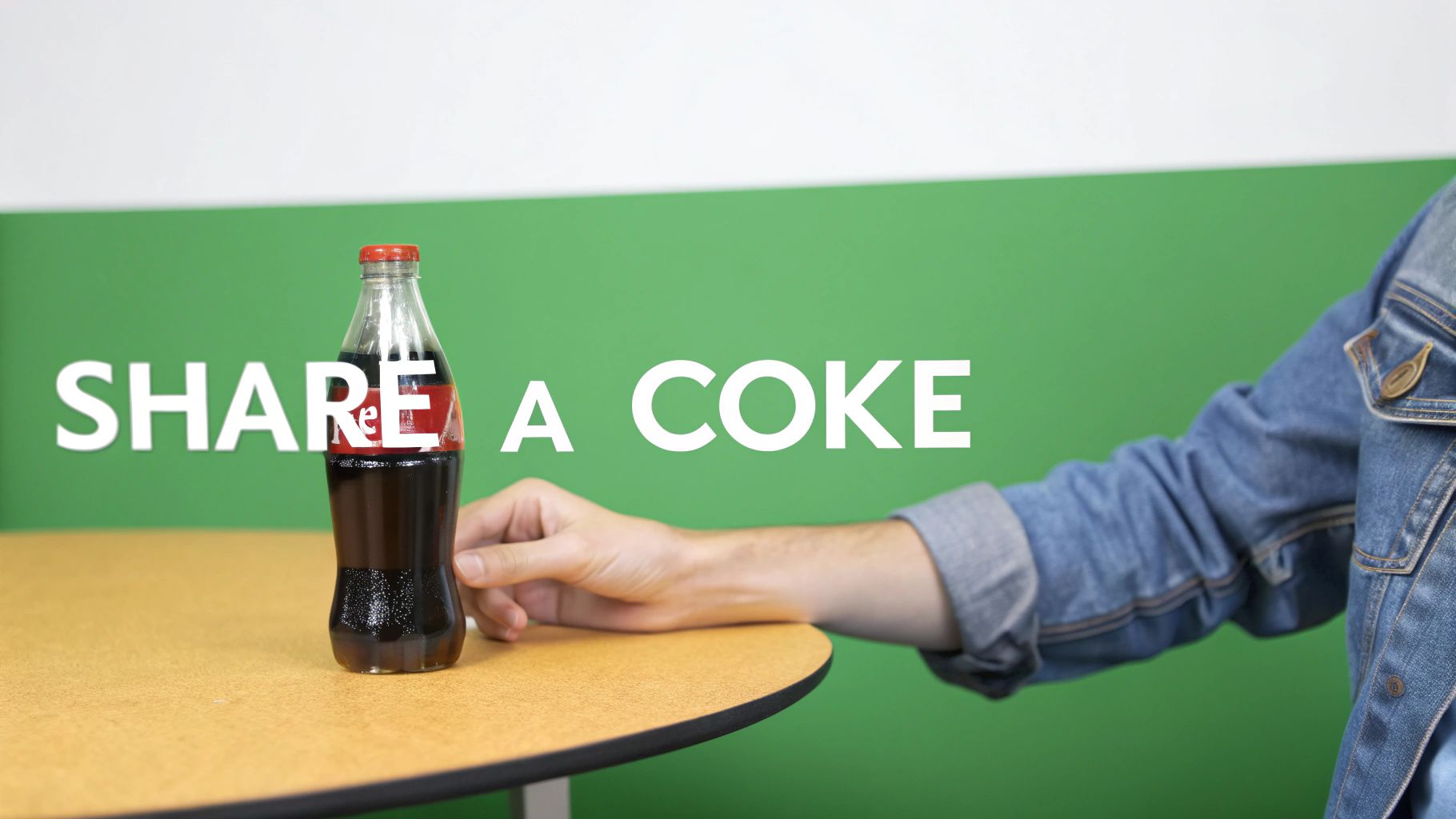
The campaign shifted the narrative from the brand to the consumer. The story was no longer about Coca-Cola; it was about the moment you found a bottle with your name, a friend's name, or a family member's name. This empowered consumers to create and share their own personal stories, effectively turning them into brand ambassadors on a global scale.
Strategic Breakdown
- Core Technique: Personalization at Scale. By putting individual names on its products, Coca-Cola made each consumer feel seen and special. This created a powerful trigger for sharing, both in person and online, making the consumer the hero of the story.
- Why It Worked: The campaign tapped into a fundamental human desire for connection and recognition. It was interactive, highly shareable on social media, and created a "treasure hunt" experience for shoppers. This user-generated content provided a massive, authentic marketing push that felt personal, not corporate.
- Measurable Impact: In its first year in the U.S., the campaign helped reverse a decade of declining sales, increasing soft drink sales by over 2%. More than 500,000 photos were shared online using the #ShareACoke hashtag, and Coca-Cola gained approximately 25 million new Facebook followers.
Actionable Takeaways
You can leverage personalization by incorporating persuasive writing techniques that make your audience feel like you're speaking directly to them.
- Make the Customer the Hero: Shift your focus from your brand's story to enabling your customers' stories. How can your product be a catalyst for their personal experiences?
- Encourage Social Sharing: Create a built-in reason for customers to share their experience. A unique hashtag, a customizable product feature, or a photo-worthy moment can spark organic user-generated content.
- Leverage Data for Personalization: Use customer data (ethically) to create personalized marketing messages, product recommendations, or experiences that show you understand their individual needs and preferences.
3. Patagonia's Environmental Activism Storytelling
Patagonia has masterfully woven its environmental mission into its core identity, creating one of the most authentic brand storytelling examples available. Instead of focusing on product features, the company tells compelling stories about environmental conservation, sustainable sourcing, and the urgent need for consumer activism. Its narrative isn't an advertisement; it's a call to action.
The famous "Don't Buy This Jacket" campaign perfectly captures this philosophy. By telling customers to think twice before purchasing, Patagonia reinforced its commitment to sustainability over profits. This counterintuitive story cemented its reputation as a mission-driven brand, attracting a fiercely loyal community that shares its values.
Strategic Breakdown
- Core Technique: Mission-Driven Narrative. Patagonia's story is its mission. Every piece of content, from documentary films about dam removal to articles on regenerative agriculture, reinforces its purpose: "We're in business to save our home planet."
- Why It Worked: This approach builds unparalleled trust and authenticity. In an era of greenwashing, Patagonia’s long-standing, tangible actions back up its words. This consistency turns customers into advocates who feel they are part of a larger movement.
- Measurable Impact: The brand enjoys exceptional customer loyalty and has built a billion-dollar business with minimal traditional advertising. Yvon Chouinard's 2022 decision to give the company away to fight climate change was the ultimate storytelling act, generating massive global press and solidifying the brand's legacy.
Actionable Takeaways
To build a narrative around your mission, your commitment must be genuine and visible in your business operations.
- Lead with Your "Why": Clearly define your company's purpose beyond profit. Make this mission the central hero of your brand story.
- Show, Don't Just Tell: Create content that documents your mission in action. This could include documentary-style videos, transparency reports, or stories about the people your mission impacts.
- Empower Your Audience: Frame your customers as partners in your mission. Provide them with resources, information, and opportunities to get involved, making them active participants in the story.
4. Dove's 'Real Beauty' Campaign
Dove’s “Real Beauty” campaign is a landmark case study in brand storytelling examples that confronts societal norms. Launched in 2004, it shifted the conversation from product benefits to a cultural mission: challenging narrow, unrealistic beauty standards. Instead of using models, Dove featured real women of diverse ages, sizes, and ethnicities, sparking a global conversation about self-esteem.
The narrative transformed Dove from a soap company into a champion for authentic beauty. The story wasn't about achieving a flawless look; it was about celebrating the beauty that already exists in every woman. This purpose-driven approach created an immensely powerful emotional bond, positioning Dove as a brand that understands and validates its audience on a deeply personal level.
Strategic Breakdown
- Core Technique: Purpose-Driven Storytelling. Dove anchored its brand story to a significant social issue directly relevant to its audience. The campaign was built on a foundation of authentic consumer insight, revealing that only 2% of women globally described themselves as beautiful.
- Why It Worked: It tapped into a widespread frustration with the beauty industry's impossible standards. By using real women and unscripted stories, particularly in viral videos like "Real Beauty Sketches," Dove earned authenticity and credibility. This created a powerful sense of community and advocacy.
- Measurable Impact: The campaign has been a massive commercial and cultural success. In its first decade, sales for Dove reportedly jumped from $2.5 billion to over $4 billion. The "Real Beauty Sketches" video became the most-watched online ad of all time, generating billions of impressions and revitalizing the brand for a new generation.
Actionable Takeaways
To build a similar strategy, ground your brand narrative in a genuine social cause or consumer tension that aligns with your mission.
- Start with Insight: Conduct research to uncover a genuine tension or struggle your audience faces. What societal issue is relevant to your products and your customers' lives?
- Champion Real Stories: Feature your actual customers as the heroes of your narrative. Use their unscripted testimonials and experiences to build authenticity and emotional resonance.
- Commit for the Long Term: A purpose-driven story isn't a one-off campaign; it's a long-term brand commitment. Consistently reinforce your message across all channels over years to build trust and lasting impact.
5. Netflix's Data-Driven Narrative Storytelling
Netflix has pioneered a new era of brand storytelling by masterfully blending data analytics with creative narrative. Instead of broad, one-size-fits-all marketing, Netflix uses viewer data to craft personalized stories. The narrative isn't just in their original content; it's in the way they present that content to each user, from custom-generated thumbnails to genre descriptions that change based on viewing habits.
This approach makes millions of subscribers feel like the brand is speaking directly to them. The story Netflix tells is one of discovery and personal entertainment, curated "just for you." It transforms a massive content library into an intimate, engaging experience, making it one of the most sophisticated brand storytelling examples of the digital age.
Strategic Breakdown
- Core Technique: Personalized Narrative at Scale. Netflix analyzes user behavior-what you watch, when you watch, and what you skip-to build a profile. It then uses this profile to frame its content recommendations as a continuous, evolving story tailored to your unique tastes.
- Why It Worked: This method directly addresses consumer desire for relevance and personalization. By making the user the protagonist of their own entertainment journey, Netflix creates a powerful feedback loop that increases engagement, reduces churn, and fosters a deep sense of brand loyalty.
- Measurable Impact: Netflix's recommendation engine is estimated to save the company over $1 billion per year by reducing subscriber cancellations. Furthermore, its data-driven content acquisition and production strategy, which led to hits like House of Cards, has fundamentally disrupted the entertainment industry.
Actionable Takeaways
You can leverage data-driven storytelling by focusing on understanding and responding to your audience's behavior. Learning key narrative writing techniques can help you turn those data insights into compelling stories.
- Use Data to Find the Story: Analyze customer data (e.g., purchase history, website navigation, support tickets) to identify common pain points and preferences. Use these insights to craft targeted messaging that speaks directly to specific segments.
- Personalize the User Journey: Implement personalization on your website or app. This could be as simple as a "Recommended for You" section or as complex as dynamic content that changes based on past interactions.
- Test and Iterate: A/B test different narrative angles in your marketing campaigns. Use engagement data to determine which stories resonate most strongly and refine your approach accordingly.
6. GoPro's User-Generated Content Revolution
GoPro shifted the paradigm of brand storytelling by empowering its customers to become the storytellers. Instead of producing polished corporate ads, the company built its brand on the back of authentic, exhilarating user-generated content (UGC). This strategy turned the focus from the camera itself to the incredible human experiences it captured, from extreme sports to heartwarming family moments.

This narrative effectively made the product invisible, positioning it as the silent enabler of adventure and memory-making. The brand's story is not a single narrative but a mosaic of thousands of individual stories, creating a powerful and relatable tale of human achievement and joy. This approach is one of the most effective brand storytelling examples because it builds a community, not just a customer base.
Strategic Breakdown
- Core Technique: Community as the Hero. GoPro made its users the heroes of the brand story. By showcasing their content, it celebrated their lives, passions, and adventures, turning them into brand evangelists.
- Why It Worked: UGC is inherently authentic and trustworthy. Consumers see real people using the product in incredible ways, which provides powerful social proof and inspiration. This endless stream of content also solved the marketing team's challenge of constant content creation.
- Measurable Impact: GoPro's YouTube channel has amassed over 10 million subscribers and billions of views, almost entirely from user-submitted videos. This content-driven strategy was crucial to the company's rapid growth and its IPO valuation of nearly $3 billion in 2014.
Actionable Takeaways
You can leverage your community as the cornerstone of your brand narrative.
- Incentivize Submissions: Create awards, contests, or simple feature programs (like GoPro Awards) that encourage users to submit their best content. Offer rewards like cash, free products, or public recognition.
- Make Submission Effortless: Design a clear and simple process for users to upload their photos, videos, or stories. Remove any friction that might prevent them from sharing.
- Amplify and Curate: Don't just collect content; celebrate it. Feature the best user stories prominently on your social media, website, and email newsletters, always giving credit to the creator to foster a sense of community pride.
7. Slack's Internal Culture and 'Work Simplified' Storytelling
Slack excels at B2B brand storytelling examples by shifting the narrative from product features to workplace transformation. Instead of focusing on channels and integrations, Slack tells stories about how its platform simplifies work, fosters a collaborative culture, and solves tangible communication problems. The narrative is human-centered, focusing on the people who use the tool rather than the tool itself.
This approach turns a software product into a catalyst for cultural change. Through its blog, case studies, and customer testimonials, Slack highlights stories of teams overcoming chaos, breaking down silos, and achieving productivity breakthroughs. This problem-solution narrative resonates deeply with both decision-makers looking for efficiency and employees seeking a better work experience.
Strategic Breakdown
- Core Technique: Problem-Centric Narrative. Slack doesn't sell software; it sells a solution to a universal problem: workplace communication chaos. Its stories start with the pain points customers face (email overload, missed messages) and end with the relief and efficiency Slack provides.
- Why It Worked: This method transformed a B2B SaaS product into a relatable, must-have tool. By focusing on the human impact of improved communication, Slack built an emotional connection with users, which is rare in the B2B space. This created powerful word-of-mouth marketing and organic adoption within organizations.
- Measurable Impact: Slack’s storytelling-driven growth is legendary. The company reached a $1 billion valuation in just over a year with minimal traditional marketing spend. Its customer stories and case studies, like the one detailing how Sandwich Video cut internal email by 95%, provide concrete proof that supports the brand narrative.
Actionable Takeaways
You can adopt Slack's strategy by reframing your product as the hero in your customer’s story.
- Identify the "Villain": What common problem, frustration, or inefficiency does your product defeat? Frame this as the antagonist in your brand story.
- Show, Don't Just Tell: Instead of listing features, create detailed case studies and blog posts that narrate a customer's journey from struggle to success using your product. Use real quotes and data points.
- Empower Your Employees: Encourage your team to share authentic stories about how your company lives its values and uses its own products. This internal advocacy builds an authentic brand narrative from the inside out.
8. LEGO's Fan Community and Nostalgia Storytelling
LEGO has mastered intergenerational brand storytelling examples by shifting the narrative from the product to the builders themselves. Instead of just selling plastic bricks, LEGO tells stories about imagination, creativity, and the passionate community that brings its sets to life. This approach transforms the brand from a toy manufacturer into a platform for human expression.
The brand celebrates its fans, from children building their first creations to Adult Fans of LEGO (AFOLs) engineering complex masterpieces. Platforms like LEGO Ideas, where fans submit their own designs for a chance to become official sets, directly integrate the community into the brand’s story. This narrative fosters a powerful sense of belonging and nostalgia, ensuring the brand’s emotional connection is passed down through generations.
Strategic Breakdown
- Core Technique: Community-Centric Narrative. LEGO puts its audience at the center of the story. The heroes aren’t characters in a commercial; they are the real people who use the product. The brand's role is simply to provide the tools for their creativity.
- Why It Worked: This strategy builds an incredibly loyal and engaged ecosystem. By celebrating user-generated content and involving fans in product development, LEGO creates a continuous feedback loop of inspiration and validation that strengthens its community and drives innovation.
- Measurable Impact: The LEGO Ideas platform has produced over 50 official sets, generating millions in revenue and immense brand loyalty. The AFOL community is a powerful marketing engine, with thousands of blogs, YouTube channels, and conventions dedicated to the brand, all driven by organic passion.
Actionable Takeaways
To build a community-driven story like LEGO, you need to empower your audience and make them the hero of your brand's narrative.
- Create a Platform for Participation: Develop a space where customers can share their creations, ideas, or experiences with your product (e.g., a dedicated forum, social media hashtag, or submission portal).
- Celebrate Your Fans: Actively feature and reward user-generated content. Highlight customer stories in your marketing to show that you value their contributions and creativity.
- Co-Create with Your Community: Involve your most passionate customers in the product development or content creation process. This builds a deep sense of ownership and transforms them into powerful brand advocates.
9. Warby Parker's Accessibility and Social Impact Narrative
Warby Parker disrupted the eyewear industry by building its brand story around a powerful social mission. Instead of focusing on luxury or high fashion, their narrative centers on making stylish glasses affordable and accessible. This story is another prime example of effective brand storytelling examples where the company's "why" takes center stage.
The cornerstone of their story is the "Buy a Pair, Give a Pair" program. For every pair of glasses sold, a pair is distributed to someone in need. This simple, powerful premise transforms a routine purchase into an act of social good, allowing customers to become heroes in the brand's narrative. The story isn't just about buying glasses; it’s about participating in a movement to solve a global health problem.
Strategic Breakdown
- Core Technique: Mission-Driven Narrative. Warby Parker integrated its social mission directly into its business model and brand identity. The story positions the company as a solution-oriented challenger to an overpriced and inaccessible industry.
- Why It Worked: This approach created an immediate emotional connection and a clear differentiator in a crowded market. Consumers felt good about their purchases, knowing their money contributed to a tangible social impact. This built a loyal community that valued purpose over price alone.
- Measurable Impact: The "Buy a Pair, Give a Pair" program has resulted in over 15 million pairs of glasses being distributed to people in need. The company was valued at $3 billion at the time of its 2021 direct listing, demonstrating that a mission-driven model can be incredibly profitable.
Actionable Takeaways
- Embed Your Mission: Weave your social or environmental mission into the fabric of your business model, not just your marketing. Make it a core part of the customer transaction.
- Tell Beneficiary Stories: Go beyond statistics. Share authentic, human stories of the individuals and communities your mission supports. This transforms abstract impact into relatable emotional narratives.
- Be Transparent with Impact: Regularly publish impact reports or updates that show customers the tangible results of their support. Use clear data and compelling visuals to demonstrate your commitment and build trust.
10. Old Spice's Humor and Personality-Driven Viral Storytelling
Old Spice's "The Man Your Man Could Smell Like" campaign is a masterclass in using humor and personality as primary brand storytelling examples. Launched in 2010, the campaign didn't focus on ingredients; it created a suave, absurdly charming character who spoke directly to female viewers, the primary purchasers of men's body wash. This narrative was built on entertainment, not product specs.
The story wasn't about the soap itself, but about the idea of the man who uses it. The fast-paced, surreal commercial starring Isaiah Mustafa became a viral sensation. By creating a character and world so distinctive and hilarious, Old Spice transformed its dusty image into a culturally relevant icon, proving that a strong personality can be more compelling than a list of features.
Strategic Breakdown
- Core Technique: Personality-Driven Entertainment. Old Spice built its story around a charismatic, fictional character. The brand’s personality became the narrative, turning advertisements into must-see content that felt more like a comedy sketch than a commercial.
- Why It Worked: The campaign was disruptive in a category known for generic ads focused on masculinity. Its humor was unexpected and highly shareable, leveraging the early power of YouTube and social media to create a cultural moment. The direct-to-camera address created a personal, engaging connection with the audience.
- Measurable Impact: The initial YouTube video garnered over 40 million views in its first week. Within months, Old Spice sales increased by 107%. The subsequent real-time "Response Campaign," where the character answered fan questions on social media, further solidified its viral success and audience engagement.
Actionable Takeaways
Building a brand story around a distinct personality can create powerful, lasting connections. This approach works best when you want to revitalize a brand or stand out in a crowded market.
- Develop a Distinctive Brand Voice: Define your brand’s personality. Is it witty, sophisticated, rebellious, or quirky? Ensure this voice is consistent across all channels.
- Prioritize Entertainment Over Information: Create content that people want to share because it's funny, interesting, or surprising. Think like an entertainer first and a marketer second.
- Engage in Real-Time: Use social media to interact with your audience in your brand’s voice. Respond to comments, participate in trends, and make your audience part of the ongoing story.
10 Brand Storytelling Examples Compared
| Campaign | Implementation Complexity 🔄 | Resource Requirements ⚡ | Expected Outcomes 📊 | Ideal Use Cases 💡 | Key Advantages ⭐ |
|---|---|---|---|---|---|
| Apple's "Think Different" | High — long-term creative strategy, consistent narrative | High — major creative production and time investment | Strong brand equity, emotional loyalty, aspirational positioning | Rebranding; premium/mission-driven positioning | Differentiation, memorable storytelling, brand authority |
| Coca‑Cola's "Share a Coke" | Medium — logistics + personalization systems | High upfront production; moderate social amplification costs | High engagement, UGC growth, repeat purchases | Mass-market campaigns; social virality and experiential activations | Personalization at scale, virality, organic amplification |
| Patagonia's Environmental Activism | High — organizational alignment and ongoing advocacy | Medium–High — sustained activism, content and program costs | Deep trust and loyalty among value-aligned consumers; earned media | Purpose-driven brands; sustainability and advocacy narratives | Authenticity, trust, mission-based differentiation |
| Dove's "Real Beauty" | High — sensitive social research and sustained narrative | Medium–High — long-term content, partnerships, research | Cultural conversation, strong emotional loyalty, brand purpose recognition | Diversity/inclusion campaigns; social impact positioning | Social impact credibility, emotional connection, earned media |
| Netflix's Data‑Driven Storytelling | High — advanced analytics and real‑time systems | Very High — data infrastructure and engineering investment | Highly personalized engagement, efficient marketing ROI, scale | Platforms with large user bases; personalization-heavy products | Relevance at scale, data-backed insights, competitive advantage |
| GoPro's UGC Revolution | Low–Medium — community systems and curation | Low production cost; moderate community management | Authentic content library, strong community engagement, organic reach | Adventure/outdoor brands; products with experiential use cases | Low-cost authentic content, community advocacy, real-use demos |
| Slack's "Work Simplified" | Medium — employee storytelling and case studies | Medium — employee programs + content creation | Trust among B2B buyers, practical adoption stories, credibility | B2B SaaS; product-led growth and enterprise storytelling | Solution-focused credibility, employee advocacy, relatable use cases |
| LEGO's Fan & Nostalgia Storytelling | Medium–High — franchise management and continuity | High — creative franchises, partnerships, long-term IP investment | Lifetime loyalty, passionate fan communities, massive UGC | Brands with franchises, intergenerational audiences, community-driven products | Long-term engagement, fan advocacy, franchise monetization |
| Warby Parker's Social Impact Narrative | Medium — integrate mission into product and comms | Medium — impact programs, measurement and transparency | Emotional connection, earned media, trust from conscious consumers | Social enterprises; mission‑driven consumer brands | Verifiable impact storytelling, differentiation, mission-aligned loyalty |
| Old Spice's Humor‑Driven Storytelling | Low–Medium — bold creative + real‑time engagement | Medium — creative production and social responsiveness | High shareability, rapid awareness spikes, memorable voice | Attention-grabbing repositioning; social-first campaigns | Viral potential, distinctive personality, strong shareability |
Crafting Your Own Unforgettable Brand Story
Across all ten of the diverse brand storytelling examples we've explored, from Apple’s rebellious ethos to GoPro's customer-centric adventures, a powerful pattern emerges. Effective brand storytelling is not about inventing a fictional narrative; it's about uncovering and articulating an authentic truth. It’s the art of transforming your company's purpose, values, and vision into a relatable human experience that resonates deeply with a specific audience.
Patagonia doesn’t just sell jackets; it champions environmental stewardship. Dove doesn't just market soap; it spearheads a global conversation about beauty standards. These brands have transcended their products to become cultural touchstones because their stories are consistent, genuine, and lived out in every facet of their business, from product design to customer service.
Key Strategic Threads from the Examples
The most successful narratives don't just happen. They are meticulously built on strategic pillars. As you embark on creating your own story, reflect on these recurring themes from the brands we analyzed:
Define Your Core Conflict: Every great story needs a conflict. For Warby Parker, it was the inaccessible and overpriced eyewear industry. For Slack, it was the chaotic and inefficient nature of workplace communication. Identify the problem, the tension, or the "villain" your brand exists to overcome. This creates immediate stakes and gives your audience a reason to root for you.
Make Your Audience the Hero: Notice how brands like Coca-Cola ('Share a Coke') and LEGO put their customers at the center of the narrative. Instead of positioning the brand as the hero, they provide the tools and platform for their audience to become the heroes of their own stories. This fosters a sense of ownership and community that is far more powerful than a one-way marketing message.
Embrace Your Unique Personality: Old Spice proved that even a legacy brand can reinvent itself with a bold, humorous, and unforgettable personality. Your brand’s tone of voice is a critical storytelling tool. Are you the wise mentor, the witty friend, the daring innovator? Defining and consistently applying this personality makes your brand memorable and distinct.
Actionable Steps to Build Your Narrative
Moving from inspiration to implementation is the most crucial step. The journey from observing great brand storytelling examples to creating your own begins with a clear, structured approach. Don't feel overwhelmed; start with these foundational actions:
Conduct a Story Audit: What story are you currently telling, intentionally or not? Analyze your website, social media channels, and marketing materials. Does a consistent narrative emerge? Is it aligned with your core values? Identify the gaps between the story you want to tell and the one you're actually communicating.
Identify Your 'Why': Go beyond what you do or how you do it. As Simon Sinek famously articulated, start with "why." Why does your organization exist? What fundamental belief drives your every decision? This "why" is the emotional core of your story, the anchor that will connect you with your audience on a deeper level.
Choose Your Medium and Master It: The channel is part of the story. Netflix uses its own platform and data to tell stories about storytelling. GoPro's narrative is visual and visceral, perfectly suited for video. To truly craft your own unforgettable brand story, mastering various video storytelling techniques is essential to captivate your audience and drive impact in today's visually-driven landscape.
The ultimate lesson from these brands is that a story is not a single campaign; it is the very soul of your brand. It’s the invisible thread that connects your product, your employees, and your customers into a cohesive and meaningful whole. It's time to stop just selling and start telling.
Ready to translate your brand's core truth into compelling copy? Natural Write helps you refine your narrative, ensuring every word feels authentic and human. Transform your initial drafts from robotic to resonant and start building a story your audience will never forget. Discover Natural Write today.